One sec…
ARTICLE
Area Rug Cleaning — When to Clean at Home and When to Send It Out
Area rugs require different cleaning approaches than wall-to-wall carpet. Here is how to assess your rug's needs and choose between DIY care, in-home professional cleaning, and professional rug plant cleaning.
Call (857) 219-3535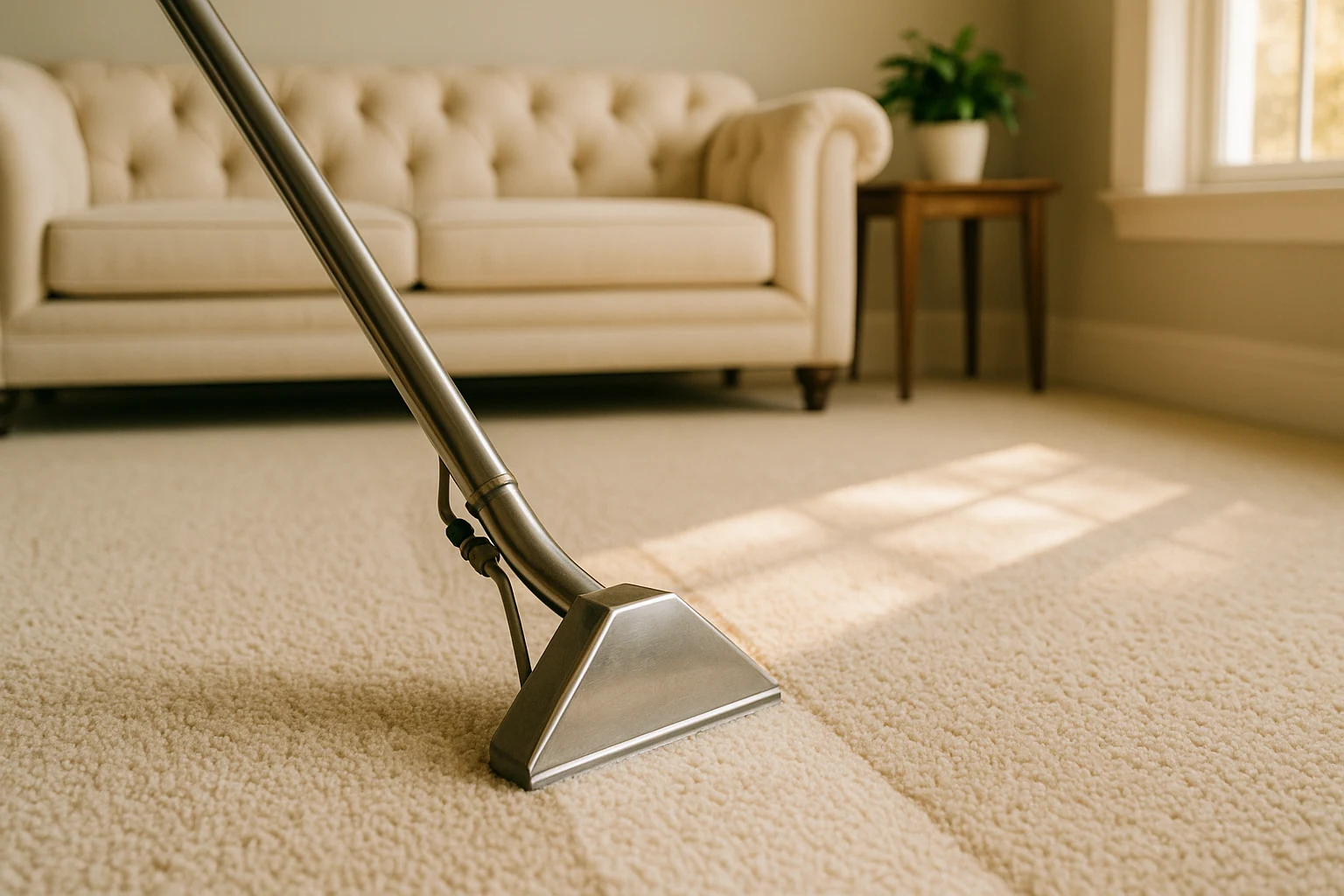
CarpetCare of New England
Why area rugs need specialized care
Area rugs present different cleaning challenges than installed carpet for several reasons. First, they are removable — which enables thorough front-and-back cleaning approaches that wall-to-wall carpet does not allow. Second, they encompass a much broader range of materials, constructions, and backing types than residential carpet — from machine-made polypropylene to hand-knotted wool and silk, each with very different sensitivity to water, heat, pH, and mechanical action.
Third, area rugs accumulate soil differently. Because they are placed over hard floors rather than being the primary floor surface, foot traffic concentrates on the rug surface but soil also falls through the pile onto the floor beneath. Turning the rug and vacuuming its underside is a step many homeowners skip — and the soil under the rug eventually transfers back into the pile.
What you can safely do at home
Regular maintenance is the most valuable thing you can do for an area rug at home. Vacuum both sides of the rug weekly in high-traffic areas. Use a suction-only vacuum without a beater bar on delicate hand-knotted or natural fiber rugs — the rotating brush can pull and distort handmade pile. Standard residential pile rugs can be vacuumed with a beater bar on the face side.
Small fresh spills can be addressed using the same blot-and-enzymatic-treat approach as for installed carpet. Shake or beat small rugs outdoors to remove dry soil from the pile base. Rotate the rug 180 degrees every six months to even out traffic wear and sun fading.
Many synthetic polypropylene and nylon rugs can be gently hand-washed with mild detergent on a hard floor surface, rinsed thoroughly, and hung to dry outdoors. This is appropriate for machine-made indoor/outdoor rugs and small synthetic decorative rugs — not for wool, silk, viscose, or hand-knotted rugs.
- Weekly vacuuming of both face and back — remove soil from underside and floor
- Suction-only vacuum for delicate handmade and natural fiber rugs
- Fresh spills: blot immediately with enzymatic cleaner for pet stains
- Rotate 180 degrees every 6 months for even wear distribution
- Synthetic rugs can often be hand-washed outdoors with mild detergent
When professional in-home cleaning is appropriate
In-home professional cleaning by a truck-mounted extraction system is appropriate for large synthetic or nylon area rugs that are difficult to transport, for moderately soiled rugs where removal to a facility is not practical, and for routine maintenance cleaning of rugs that are otherwise in good condition. The professional brings the extraction equipment to the rug rather than the rug to the facility.
The limitation of in-home cleaning is that the rug cannot be rinsed as thoroughly as at a dedicated rug cleaning plant, the back of the rug cannot be cleaned, and wet rugs cannot be dried as quickly indoors as on a rack system at a facility. For delicate, antique, or high-value rugs, in-home cleaning is a compromise compared to plant cleaning.
When to send it to a professional rug cleaning plant
A professional rug cleaning plant — a dedicated facility with rug washing bays, rinsing systems, centrifugal spinning extraction, and controlled drying — provides the most thorough cleaning available. This is the appropriate choice for wool, silk, viscose, cotton, jute-backed, hand-knotted, antique, or high-value rugs, for rugs with pet contamination in the backing, and for rugs requiring specialty treatments like fringe cleaning, color testing, or tassle restoration.
Plant cleaning involves dusting the rug (mechanical agitation to dislodge dry soil from the pile base — more effective than vacuuming alone), submersion washing in a purpose-built rug washing pit with pH-appropriate cleaning solutions, thorough rinsing until the rinse water runs clear, centrifugal extraction (a rug centrifuge removes water far more effectively than extraction wands), and rack-drying in a controlled environment with forced air.
The result of plant cleaning is categorically different from in-home cleaning — the rug is cleaned through its entire depth, the backing is treated, and thorough rinsing eliminates any cleaning product residue. For investment rugs worth $1,000 or more, plant cleaning at least every two to three years is worthwhile.
- Plant cleaning required for: wool, silk, viscose, hand-knotted, antique rugs
- Plant cleaning recommended for: heavy soiling, pet contamination in backing, high-value rugs
- Rug dusting removes dry soil from pile base before washing — more effective than vacuuming
- Submersion washing + centrifugal extraction + rack drying is the gold standard
- Fringe cleaning, color restoration, and backing treatment available at specialty plants
Frequently asked questions
Can I wash my area rug in a front-loading washing machine?
Small rugs (up to 3 feet by 5 feet) that are machine-washable — check the label — can be washed in large-capacity front-loading machines on a gentle cycle with cold water and mild detergent. Do not put any rug with a rubber backing in a dryer; air dry flat. Rugs with fringe, hand-knotted construction, or natural fiber backing should never be machine-washed.
How do I know if my rug is wool or synthetic?
The burn test is definitive: cut a few pile fibers from an inconspicuous edge. Wool burns slowly, smells like hair, and produces an ash that crumbles. Synthetic fiber melts, produces black smoke, and may drip. Silk burns slowly with a smell similar to wool. Viscose (often mislabeled as bamboo silk or art silk) burns like paper — it is a cellulosic fiber, not a protein fiber, and is extremely sensitive to water damage.
How should I store an area rug long-term?
Clean the rug professionally before storage — storing a soiled rug allows soil to attract pests and degrade the fiber during storage. Roll the rug around a cardboard tube with the pile facing outward (not inward, which stresses the foundation). Wrap in breathable cotton muslin — not plastic, which traps moisture. Store flat or elevated off the ground in a climate-controlled space. Never fold a hand-knotted rug.